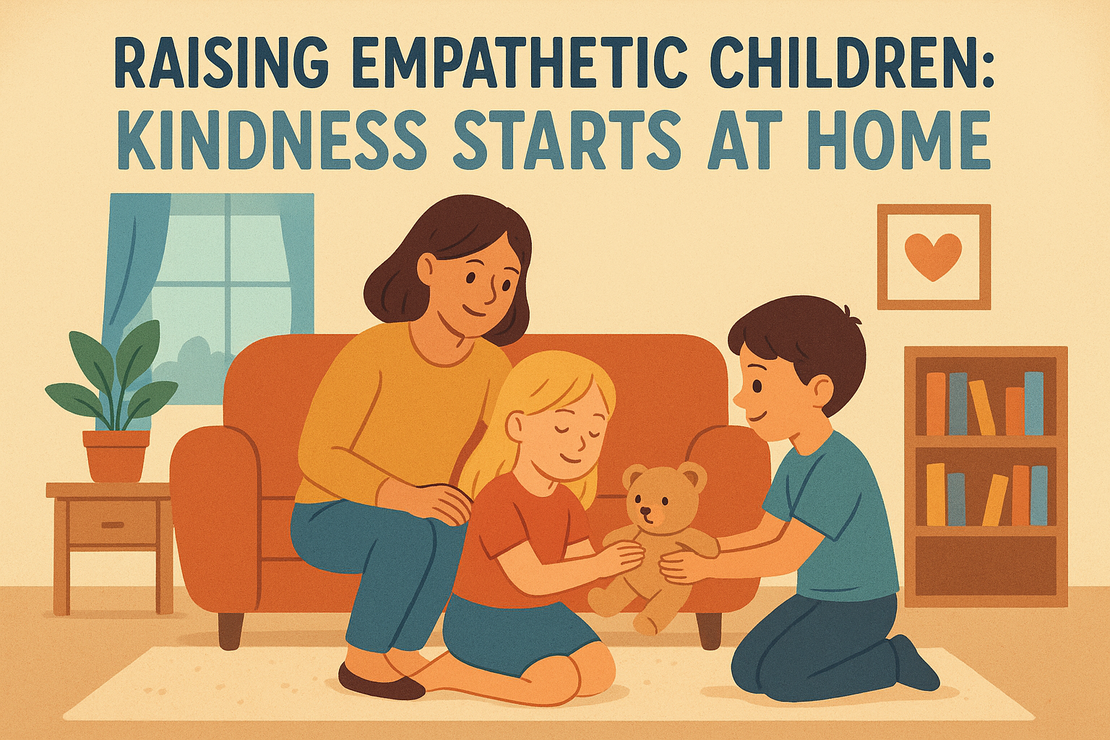
Raising Empathetic Children: Kindness Starts at Home
- Parenting , Child development
- August 14, 2025
Table of Contents
Raising Empathetic Children: Kindness Starts at Home
Empathy—the ability to understand and share another person’s feelings—is a vital skill for healthy relationships and emotional well-being. As parents, you play a crucial role in fostering kindness and empathy in your children.
Why Empathy Matters
- Helps children build strong friendships and resolve conflicts
- Encourages compassion, inclusion, and respect for others
- Reduces bullying and promotes positive behavior
Strategies to Nurture Empathy
Model Kindness and Respect
Demonstrate empathy by treating others with care. Your child learns by watching your example.
Example: “I wonder if Mr. Lee is okay; he seemed sad today.”Talk About Feelings
Regularly name and discuss emotions.
Example: “You look frustrated. Would you like to talk about what happened?”
Encourage your child to consider how others might feel in particular situations.Encourage Perspective-Taking
Ask questions like:
“How do you think your friend felt when you shared your toys?”
Use stories and books to explore characters’ feelings and choices.Praise Acts of Kindness
Recognize and celebrate kind behavior.
Example: “I noticed you comforting your sister when she was upset. That was very thoughtful!”Teach Apology and Forgiveness
Guide your child in offering sincere apologies and learning to forgive, strengthening emotional resilience.Volunteer Together
Participate in community service or family volunteering projects to model helping others.Practice Gratitude
Create daily routines to share what you’re thankful for, fostering appreciation and positivity.Use Play and Role-Play
Act out different feelings and situations with toys or role-playing to help your child understand emotions and problem-solving.
Everyday Example
If your child takes a toy from a sibling, gently ask:
“How would you feel if someone took your favorite toy? What might be a kinder way to ask for it?”
Quick Tips for Parents
- Be patient—developing empathy is a lifelong journey.
- Encourage sharing and cooperation during daily activities.
- Highlight the positive impact of kind actions.
- Teach your child to see differences as strengths.
- Create a loving and supportive home where kindness is valued and practiced.
By nurturing empathy at home, you help your child develop essential social and emotional skills that lead to compassionate, respectful relationships throughout life.